
Another interesting point contained in his piece is the estimate from the IPE business school that by March there may be 500,000 unsold homes in Spain - more or less one year's residential construction output at the old pace. This is going to need a long time to correct and work out of the system. Of course, Zapatero is right when he mentions that Spain is running a 2% of GDP fiscal surplus, and so fiscal policy is available to correct the problem to some extent. But as we have learnt in the previous case of Japan - which went into a major economic crisis in 1992 following a significant housing bust - this strategy can only be a short term holding operation, the Spanish economy needs to "reinvent itself" and quickly.
(of course, the other lesson we were supposed to have learned from the Japanese experience is that to prevent a country in this situation - where they may be a major and severe correction in housing prices, and a "wealth effect" motivated deflation in demand, is that a rapid and decisive loosening of monetary policy is called for to ward off the risk of price deflation - constinuing strong price inflation in Spain is very unlikely if we look at what is happening to domestic demand - but the ECB seems to be light years away from waking up to this danger at the present time. Of course, since what we have is inpart a credit crunch, even traditional monetary policy measures like lowering short term interest rates may have little effect, but that is no excuse for not doing so).
Since in terms of the demographics of the time and the general profile of the problem Japan 1992 and Spain today are so strikingly similar it is hard to resist the comparison (it may be the only relevant one we have to go by) and it is interesting to note that one of the first people to dismiss out of hand Dominique Strauss Kahn's recent proposal to have a concerted G7 fiscal response to the weakening in global demand was Fukushiro Nukaga, Japan's finance minister, who reportedly responded to the proposal by saying: "We have learned what such fiscal spending could mean from our experience after the burst of the bubble," referring to attempts to spend Japan out of recession and deflation in the 1990s. I think Spain's next government really needs to take note of this experience. Short term fiscal stimulus is fine, but you need to get to the root of the problem.
Crawford also points to the growing global presence and importance of Spain's major companies, and this is important, but as Japan has gradually learnt to its cost, in macroeconomic terms it is hard to substitute global corporate prowess for local domestic demand. Spain's economy has been largely driven by domestic consumption and increasing consumer credit in recent years. This is now done. Finished. The situation in this sense - if we look at the comparative demographics - is much more severe than in the United States. Worse, people are going to have to start paying back what they have borrowed, both individually and collectively. The recent boom was not financed by Spanish savings but by a steady and sustained inflow of funds made possible by the eurosystem. Some 60% of the investment which went to finance the Cedulas Hipotecarias came from outside Spain, and these capital flows now have to reverse to some extent. So all of this will be a negative are far as medium term consumption in Spain is concerned. Spain now needs to become an export driven economy, and this is a huge change, and is obviously going to need some years to achieve.
My only real doubts at the present time relate to what is actually going to happen to the immigrants and what will happen to inflation. Maintaining the roughly 5 million recent immigrants who currently live and work in Spain is important to the country's demographic future, given the long term very low fertility that the country has been experiencing. These "replacement migrants" make up for the missing births produced by the birth postponement process (as I explain here). So holding onto these migrants is going to be critical, if hard, since many will be without work in the not too distant future, and with little in the way of formal financial support from the Spanish authorities. Again, this is going to be another of the major items on the "to do" list of the incoming government.
Lastly inflation. Basically the accelerating inflation we are currently seeing is unsustainable in the light of the collapse in internal demand. So the process will reverse, indeed if it doesn't - and the euro stays near current levels - it is hard to see where Spain will get the competitivity from to begin the long march to an export driven nation. The German experience post the collapse of their 1995 construction boom might be instructive: ten years of almost constant wage deflation as relative prices come back into line. This may be hard to contemplate in Spain at this point, but my best guess is that this is where we are headed. Oil prices are unlikely to increase in 2008, and may well drop back if there is a significant decline in global demand - although even this isn't guaranteed, since whatever happens in the US and Europe some countries (like India) will keep growing, and they will be energy guzzlers. Also Spanish property and land prices may start to fall drastically at some point - looking at the one years supply of unsold homes (and remember this is one years supply at the old level, it may well be two years supply at the new one) - so a sharp correction downwards may well take place at some point as bankruptcies start to occur. If this were to happen, then rather than moderate but long term wage deflation, Spain might face outright and straightforwad price deflation, Japanese style. At this point it is too early to say, but this is the other factor to watch for as we move forward.
And now for Leslie Crawford:
Eurostat, the European Union’s data compiler, in December published a dry table that revealed a remarkable fact: Spaniards had become richer per head than Italians, writes Leslie Crawford.
Anyone who knew Spain in the 1970s – when it was a byword for backwardness and governed by an ageing dictator – can only marvel at its political and economic transformation. Along with Ireland, Spain has been one of the unequivocal success stories of the EU, which it joined in 1986. The new member states of central and eastern Europe regard Spain as their role model, for the skill with which it used EU funds to spearhead its development.
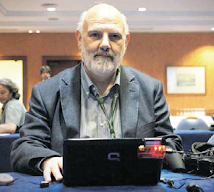
But never did Spaniards think they would one day overtake in terms of per capita income one of the founding members of the EU. José Luis Rodríguez Zapatero (pictured), the Spanish prime minister who faces a general election next month, boasts that overtaking France and even Germany by that measure is possible within five years.
Mr Zapatero’s grandstanding, however, has been obscured by doubts. The end of a 10-year housing boom, coupled with financial turmoil abroad, is leading Spaniards to question the foundations of their leap forward. The Spanish sorpasso took place just as the country’s growth was peaking. Might it prove as fleeting as Italy’s famous overtaking of the British economy in the 1980s?
Moreover, its economy is now big enough to affect Europe’s performance as a whole. “If residential construction in Spain contracts in 2008 as sharply as it did in the US in 2007, it could shave 0.2 percentage points off eurozone economic growth,” Holger Schmieding of Bank of America wrote in the Financial Times last month.
During the peak of the construction frenzy two years ago, economists described the Spanish economy as a “monoculture” of bricks and mortar and worried that there was nothing to take its place if the building boom came to an end. Construction employed 13 per cent of the workforce. The banking system channelled 60 per cent of all credit to housing-related activities.
Spain was building more homes than France, Germany and the Benelux countries combined. It was consuming half of all the cement in the Europe and it was borrowing massively abroad. Economists agreed that Spain’s credit-fuelled property boom accounted for most of the country’s growth differential with the EU.
The credit squeeze hit Spain at its most vulnerable point in the economic cycle, with an overpriced and oversupplied housing market and families and companies deep in debt. As a result, the country is on the brink of a property slump that will affect employment, consumer confidence, bank earnings and the economy as a whole, according to a number of recently published reports.
IPE, a business school that specialises in urban planning and property, estimates that there will be 500,000 unsold new homes by the end of March – roughly the number built in an average year. Given government forecasts that 500,000 more were to be built this year, the unsold stock is worrying. About half the country’s estate agents are already out of business, according to their trade association.
One consequence of the building slowdown is that unemployment has shot above the 2m mark. January’s 6 per cent increase in the number of unemployed was the highest monthly rise in 10 years. Immigrants and temporary workers are feeling the brunt of the cuts. The end of the property boom is also worrying for Spanish commercial and savings banks, which have €290bn ($425bn, £217bn) in outstanding loans to property developers and are trying to cut their exposure to the sector.
Not everyone shares the gloom, however. Mr Zapatero is unabashedly confident about his country’s economic prospects, on which his re-election prospects also depend.
“I am an optimist,” he tells business. He expects the economy to grow by “at least” 3 per cent in 2008. Mr Zapatero’s Socialist party is promising to create 2m jobs over the next four years and to raise minimum pensions and wages. If the economy fails to grow at the predicted rate, Mr Zapatero thinks old-fashioned fiscal stimulation should do the trick. The government has a “comfortable” budget surplus of 2 per cent of GDP, he says, to get things moving.
Another reason for optimism is that Spain’s big companies have used the profit windfalls of the past several years to diversify out of Spain. Joaquín Ayuso, chief executive of Ferrovial, the company that in 2006 bought BAA, the British airports operator, says: “Back in 1992, construction – mainly public works – was 90 per cent of our business and it was all in Spain. Then there was a devaluation and a recession.
“We had four horrible years. I was the director for
construction then and I was convinced I would be fired. Those years taught us a lesson: that we couldn’t depend on just one country, one business and one client, the government.”
Today, 90 per cent of Ferrovial’s assets are in the UK, Canada and the US; they include toll roads, airports and baggage handling. Less than 15 per cent of Ferrovial’s income comes from construction.
Santander and BBVA, Spain’s two big banks, have expanded abroad so that a big part of their business is based in Latin America and the UK, where Santander owns Abbey National. Telefónica, the former telecommunications monopoly, has also become world-scale.
Diversification means that even if Spain starts to flag, some companies will be able to cushion the blow with income from other parts of the world. Tighter credit conditions, however, will make it much harder for them to continue an acquisition spree that has included investments of more than €60bn in the UK alone.
In this jittery environment, resilience is a big advantage. What frightens some is the hubris that appears to have taken hold of Mr Zapatero and some of the business establishment. Only the government predicts Spain will grow by as much as 3.1 per cent in 2008. The International Monetary Fund estimate is 2.7 per cent. The Organisation for Economic Co-operation and Development forecasts Spain will grow by 2.5 per cent.
“To draw up economic policy on the basis that we are going to grow by 3 per cent this year is unrealistic, even irresponsible. Not to recognise a problem is the first step to not solving it,” says Lorenzo Bernaldo de Quiróz, of Freemarket, an economic consultancy in Madrid.
Complacency is also frightening because Spain could easily slip into Italy’s “do nothing” malaise. For the moment, Europeans prefer to shop at Zara rather than Benetton. Iberia is a going concern whereas Alitalia is bust. Telefónica is a big shareholder in Telecom Italia rather than the other way around.
“Spain has undergone such a tremendous transformation in the past two decades. Now it has to take the next step,” says Stefan Bergheim, a senior economist at Deutsche Bank. An inflation differential with the EU needs to be tackled. Productivity, which is low, has to be addressed and Spain must move on from bricks and mortar to find a more sustainable route to prosperity.




No comments:
Post a Comment